The team's work was spread across tools
The team worked in several tools at once: Notion, a CRM, kanban boards and work chats. Every morning people spent time pulling their tasks into one list, and the lead had to ask around to find out what was done and what wasn't.
As the team grew this got more obvious. The more projects ran at the same time, the harder it was to keep a common rhythm.
The time went into assembling the work, not doing it
The problem wasn't how the team worked. It was how long it took to work out who was doing what.
We didn't build another task tracker: the tools were already there. We automated the layer between them, which is where the time went every day.
One agent assembles the team's work for them
Every morning the AI agent collected tasks from all the work services and put them in order. Instead of a list spread across three tabs, people got a finished plan for the day.
Through the day it reminded people about deadlines and checked status. By evening it was clear what had been done and what hadn't.
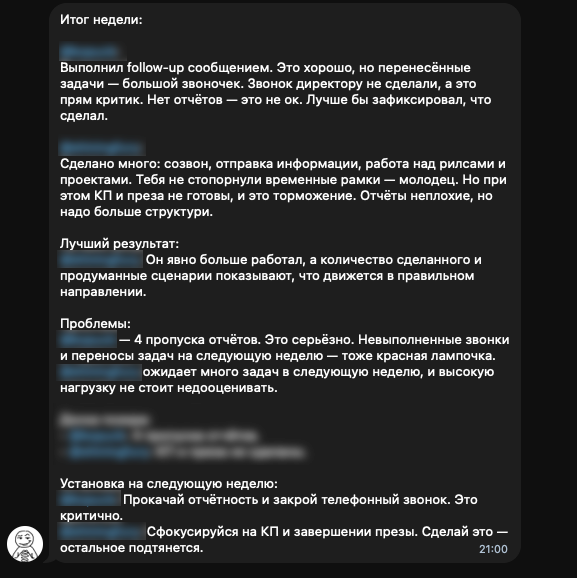
In the evening it wrote up a report, on Mondays a plan for the week, on Fridays a summary for the lead.
SOURCES                     COORDINATOR                     OUTPUT
┌──────────────────┐                                        ┌──────────────────┐
│  Notion (tasks)  │───┐                                ┌──▶│  Plan for the day│
├──────────────────┤   │                                │   ├──────────────────┤
│  CRM (deals)     │───┼──▶ [  AI-Operations Manager  ]──┼──▶│  Own task tracker│
├──────────────────┤   │             │                  │   ├──────────────────┤
│  Calendar (events) │─┤             │                  └──▶│  Push reminders  │
├──────────────────┤   │             │                      └──────────────────┘
│  Telegram (chats)│───┘             ▼                                │
└──────────────────┘          [ Status check ]                        │
                                     │                                │
                                     ▼                                ▼
                              ┌──────────────┐              ┌──────────────────┐
                              │Blocker check │─────────────▶│  Weekly summary  │
                              └──────────────┘              │  (for the lead)  │
                                     │                      └──────────────────┘
                                     └────────────────────────────────┘
                                          deadlines and focus, tracked:
                                    the team stays on pace without micromanaging
What it looks like from the inside
The team gets a personal plan for the day.
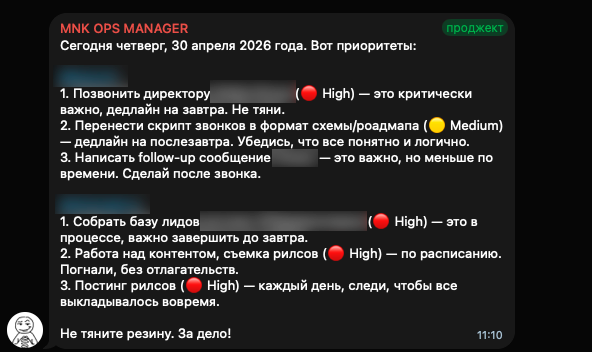
The AI reminds people about tasks and checks where things stand.
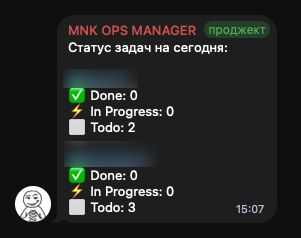
It asks for a report on the day.

The lead gets a summary of the week.
Coordination stopped eating the day
The team no longer spends time on daily coordination or on writing up reports by hand.
The lead sees the whole picture at once, without switching between services.